

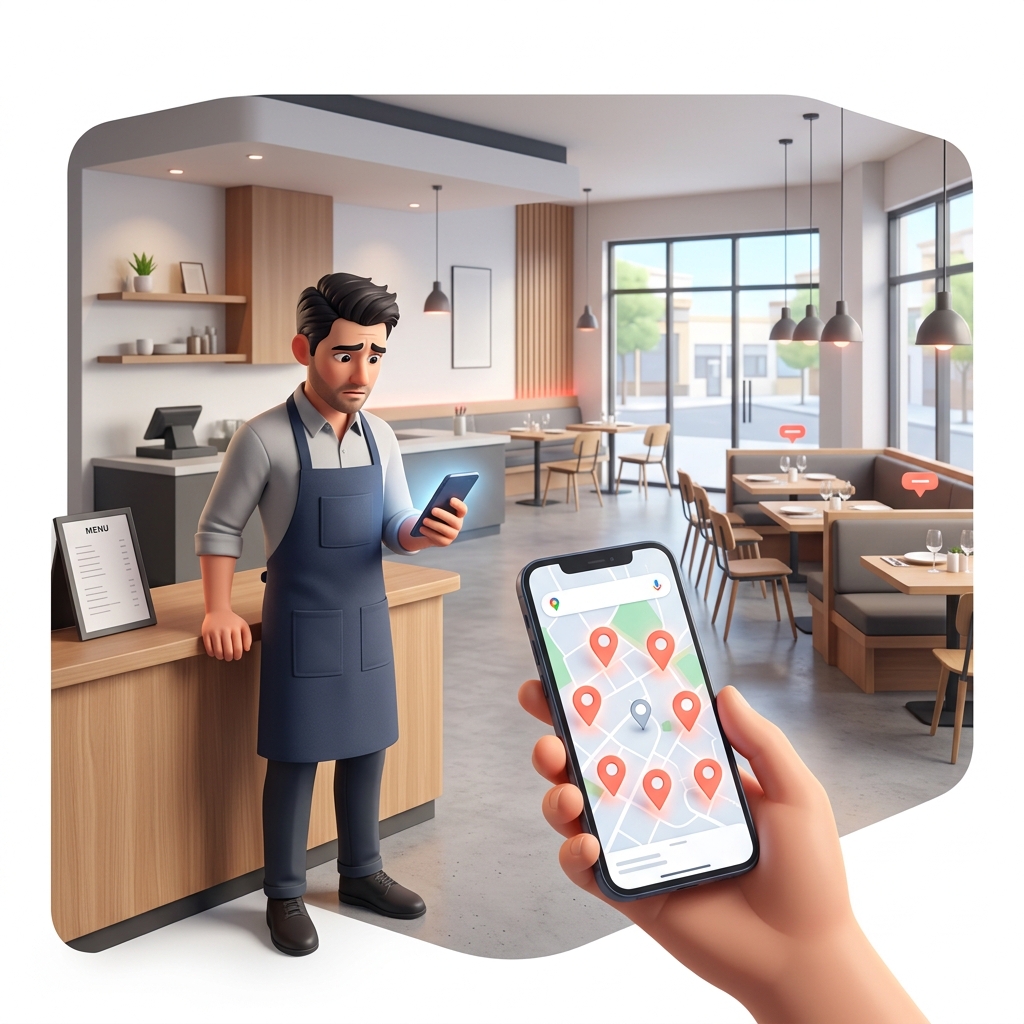
Imagine this: It is a Friday evening in Bangalore. A group of friends is craving North Indian food. They pull out their phones and search for "North Indian restaurant near me." Google instantly shows them three options on a map.
If your restaurant is not in that top three, you just lost a table of four. And you will keep losing tables every single night.
For restaurants in India, foot traffic is everything. But in 2026, foot traffic starts online. Local SEO is the process of optimizing your online presence so that when hungry people search for food in your area, your restaurant shows up first.
This guide will show you exactly how to do it. No fluff, no expensive agencies. Just practical steps you can implement today to get more diners through your doors.
Claiming Your Google Business Profile
Your Google Business Profile (GBP) is the absolute foundation of your Local SEO. It is completely free, and it is the single most important factor for ranking on Google Maps.
If you have not claimed your profile, someone else might, or Google might display incorrect information about your business. Search for your restaurant on Google. If you see an option that says "Own this business?", click it immediately and follow the verification steps.
In India, verification usually involves receiving a postcard at your restaurant's address or doing a live video call to prove you actually operate there. Do not skip this step. An unverified profile is virtually invisible to local searchers.
Choosing the Right Categories
When setting up your profile, you will be asked to choose a primary category. This choice dictates whether you show up when someone searches.
Do not just choose "Restaurant." Be specific. If you run a South Indian place, choose "South Indian Restaurant." If you serve biryani, choose "Biryani Restaurant." Google allows you to add secondary categories as well. For example, if your Biryani restaurant also serves Chinese food, add "Chinese Restaurant" as a secondary category.
Look at the top three restaurants ranking in your area. What categories are they using? Copy their strategy. Getting your categories right is half the battle won.
Perfecting Your Basic Information (NAP)
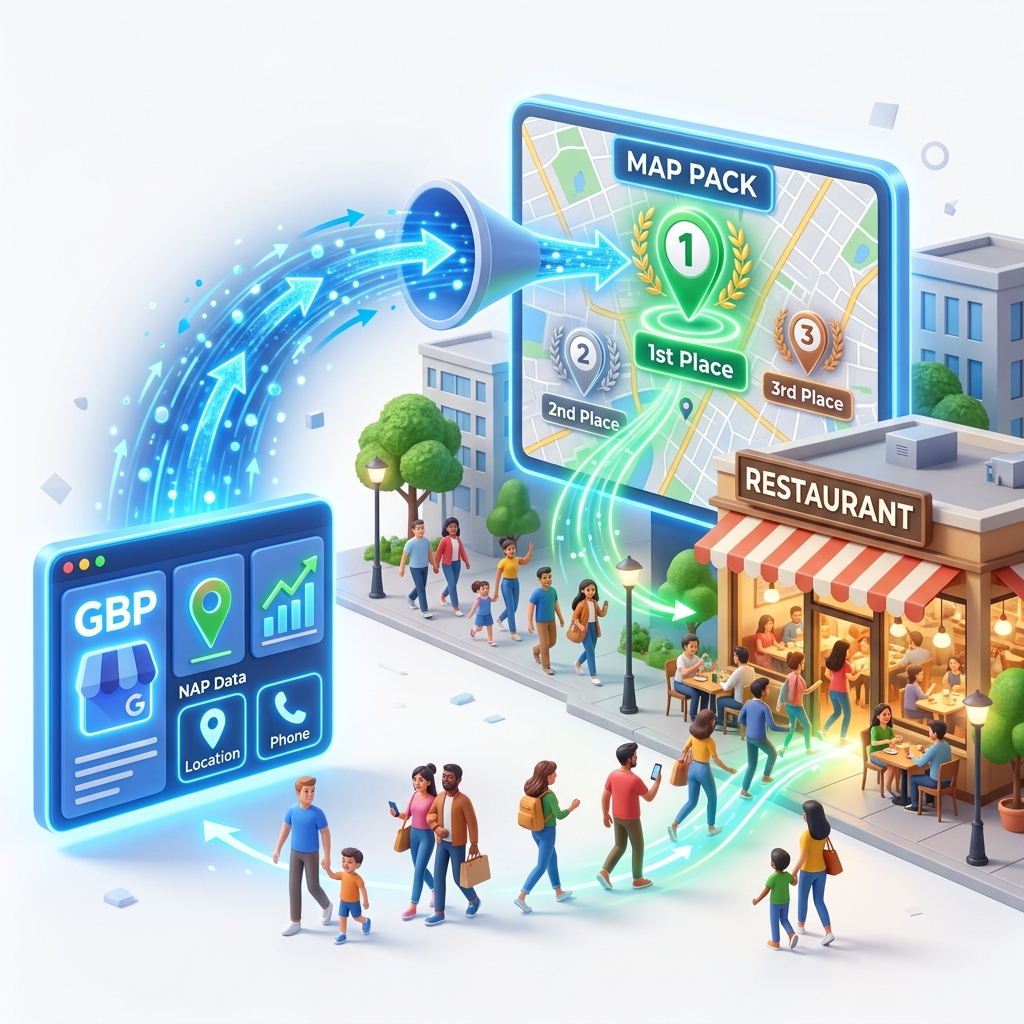
NAP stands for Name, Address, and Phone Number. Google hates inconsistencies.
If your restaurant is named "The Spice Route" on Google, but "Spice Route Cafe" on Zomato, and "The Spice Route Bangalore" on your Facebook page, Google gets confused. When Google gets confused, it drops your ranking.
Ensure your NAP is exactly the same across the entire internet. Use your exact street address. Pinpoint your location accurately on the map. Make sure your phone number is active and someone actually answers it during business hours. A missed call is a lost customer.
Uploading Your Menu Directly to Google
Many Indian restaurants make the mistake of linking their Google profile to their Zomato or Swiggy menu. Do not do this. You are sending your hard-earned traffic to a platform that charges you 20-30% commission.
Instead, use Google's built-in Menu editor. Add your top dishes, their descriptions, and their prices (in INR). Upload high-quality photos for each dish. When a customer searches for "butter chicken near me," Google scans the menus of local restaurants. If butter chicken is listed on your Google menu, your chances of ranking skyrocket.
If you have your own website with a menu, link directly to that page. You want to keep the customer in your ecosystem, not hand them over to an aggregator.
The Power of High-Quality Photos
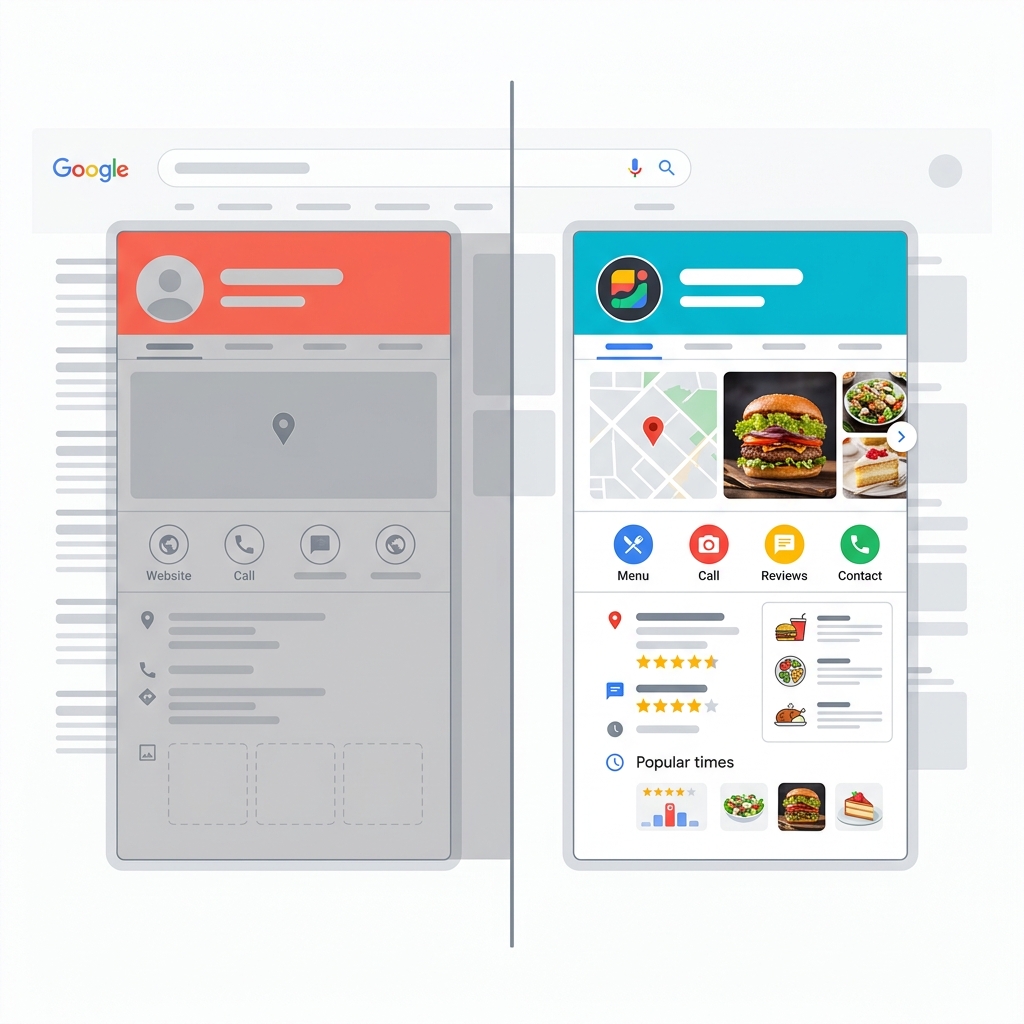
People eat with their eyes first. A restaurant profile with high-quality photos receives 42% more requests for directions than one without.
Do not upload low-resolution, blurry photos taken in bad lighting. And absolutely never use stock photos. Customers can spot a stock photo instantly, and it destroys trust.
Upload clear, appetizing photos of your best dishes. Upload photos of your restaurant's interior to show the ambiance. Show your storefront so people know what to look for when they drive by. Add new photos at least twice a month. Google's algorithm favors active profiles that are constantly updated.
Collecting and Managing Google Reviews
Reviews are the lifeblood of a local restaurant. If you have a 3.8 rating and your competitor has a 4.5 rating, you will lose almost every time.
You need a system to collect reviews consistently. Do not buy fake reviews; Google will catch you and suspend your listing. Instead, train your staff to ask happy customers for a review at the end of their meal.
Create a small standee for your tables with a QR code that links directly to your Google review page. You can generate this link directly from your GBP dashboard. Make it as easy as possible for a customer to leave a five-star rating.
Replying to Every Single Review
When a customer leaves a review, you must reply. If they leave a positive review, thank them for coming and tell them you look forward to serving them again.
If they leave a negative review, never argue. Apologize for their poor experience, take the conversation offline by offering a phone number or email, and promise to do better.
Replying to reviews shows future customers that you actually care about their experience. It also signals to Google that you are an active, engaged business owner, which gives you a slight ranking boost.
Using Google Posts to Drive Immediate Traffic
Google Posts are essentially free advertisements that show up on your business profile. You can use them to announce a weekend special, a new menu item, or a holiday discount.
If you run a cafe in Delhi and you are launching a new winter coffee menu, create a Google Post with a great photo and a "Book a Table" or "Order Now" button. These posts expire after a while, so you need to create them regularly.
Treat Google Posts like a highly visible social media feed for people who are actively looking to spend money in your area.
Why Your Restaurant Still Needs a Website
A Google Business Profile is crucial, but it is not a replacement for a dedicated website.
A well-designed website acts as the central hub for your brand. It is the one piece of digital real estate you actually own. You can optimize your website for broader searches, like "best fine dining in Mumbai."
Your website allows you to take direct reservations and direct online orders, completely bypassing the massive commissions charged by food delivery apps. If you want to know how a website impacts your overall growth, read our guide on why your website isn't getting leads.
Building Local Citations
A citation is simply any mention of your restaurant's Name, Address, and Phone Number (NAP) on another website.
In India, you should make sure your restaurant is listed accurately on platforms like JustDial, Sulekha, TripAdvisor, and EazyDiner. The more high-quality websites that list your exact business details, the more confident Google becomes that you are a legitimate, established business.
Remember, consistency is key. If your address is slightly different on JustDial than it is on Google, it will hurt your rankings.
Understanding Search Intent (AEO)
Modern SEO is not just about keywords; it is about answering questions. This is called Answer Engine Optimization (AEO).
People search for specific things like "restaurants with outdoor seating near me," or "pure veg restaurants in Chennai open now."
You need to ensure your profile and your website clearly state these specific details. If you have outdoor seating, mention it in your business description. If you are pure veg, make sure that phrase is prominently displayed. When you answer the user's specific intent, Google rewards you with higher visibility.
Consistency is the Ultimate Strategy
Local SEO is not something you set up once and forget. The restaurants that dominate Google Maps are the ones that work on it every week.
They upload a new photo every Tuesday. They reply to all their reviews every Thursday. They check their menu for accurate pricing at the start of every month.
If you are struggling to understand how different platforms interact with your business growth, read our breakdown of WordPress vs Next.js for SEO to see which technology stack actually helps you rank.
Get More Direct Bookings
Your goal should always be to reduce your reliance on third-party aggregators. Every time a customer searches for your restaurant and ends up clicking a Zomato link to order, you lose money.
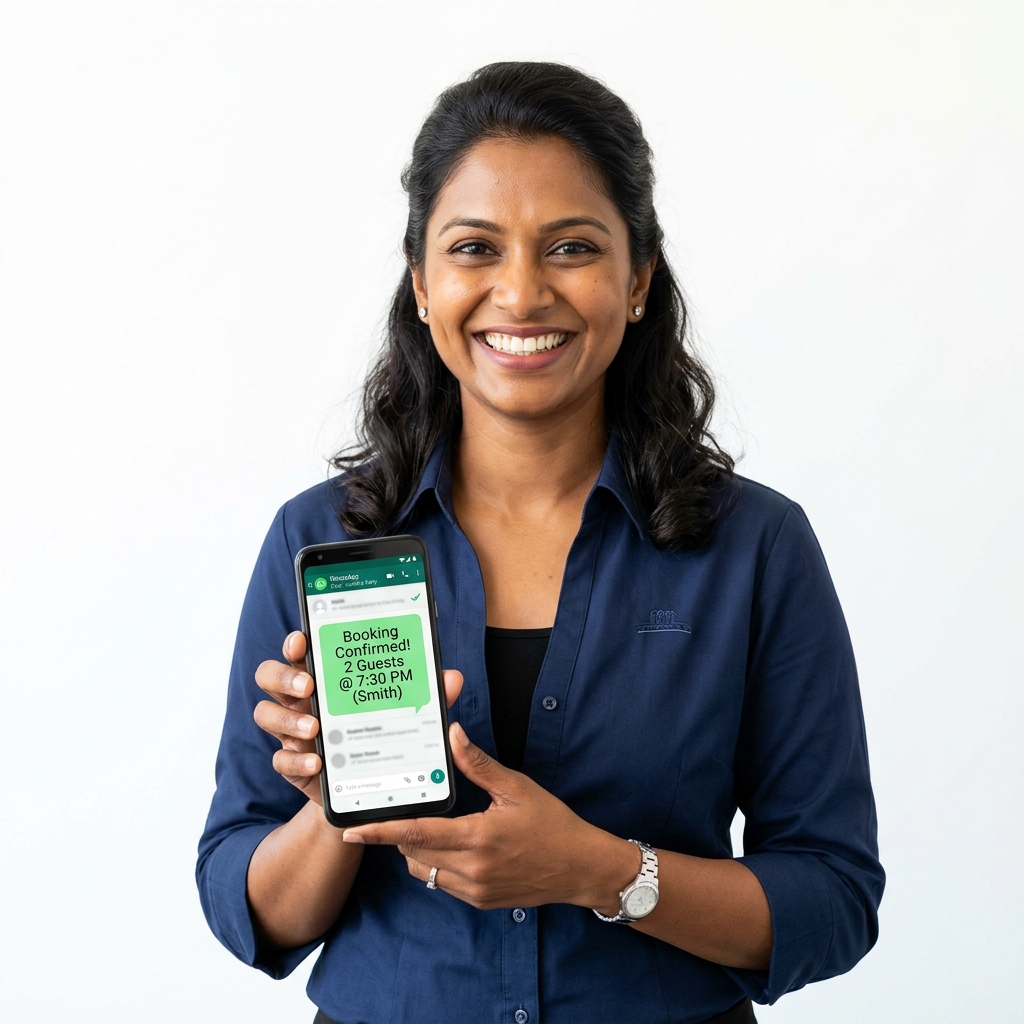
By mastering Local SEO, you ensure that your Google profile and your own website are the first things a customer sees. This drives direct calls, direct reservations, and direct orders.
If you need help setting up a high-converting website for your restaurant that drives direct bookings without the heavy commissions, we can help.
Chat with us on WhatsApp to discuss how we can build a digital presence that puts your restaurant at the top of local search results. No fluff, just results.