

The website is built. The domain is connected. You type your business name into Google and - nothing.
Or worse: you find it eventually on page four, below three competitors who've been around for years and a directory listing that hasn't been updated since 2019.
Most business owners assume that once a website goes live, Google finds it. That's not how it works. Going live and getting found are two entirely separate events - and the gap between them has nothing to do with bad luck.
Here's why it happens, and what actually fixes it.
Misconception First: Google Doesn't Know Your Site Exists Yet
Google discovers websites by crawling the web - following links from one page to another. If no other website links to yours, and you haven't submitted your site to Google directly, there is a real chance Google hasn't found it at all.
You can check this in thirty seconds. Open Google and type:
site:yourdomainname.com
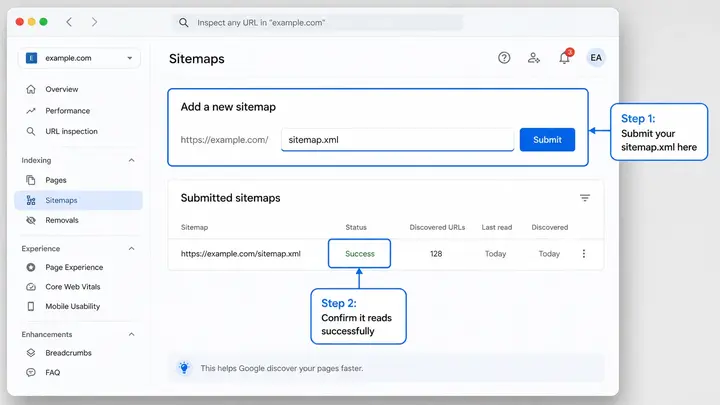
If no results appear, your site is not indexed. Google doesn't know it exists. All other ranking problems are secondary to this one.
Fix: Create a free Google Search Console account, verify your domain, and submit your sitemap. This tells Google your site exists and which pages to crawl. Most new sites get indexed within one to two weeks after submission.
Reason 1: Your Pages Have No SEO Signals
Google ranks pages, not websites. For a page to rank, it needs signals that tell Google what the page is about and who it's relevant for.
The minimum signals every page needs:
- A page title that includes the target keyword (the
<title>tag) - A clear H1 heading that matches the topic
- Body content that covers the topic with enough depth to be useful
- A meta description that summarises the page for searchers
Most websites built quickly - by freelancers rushing to deliver, or by business owners using drag-and-drop builders without SEO knowledge - skip all of these. Pages go live with titles like "Home" and headings like "Welcome to Our Company."
Google reads those signals and has no idea what the page is about. It ranks accordingly: nowhere.
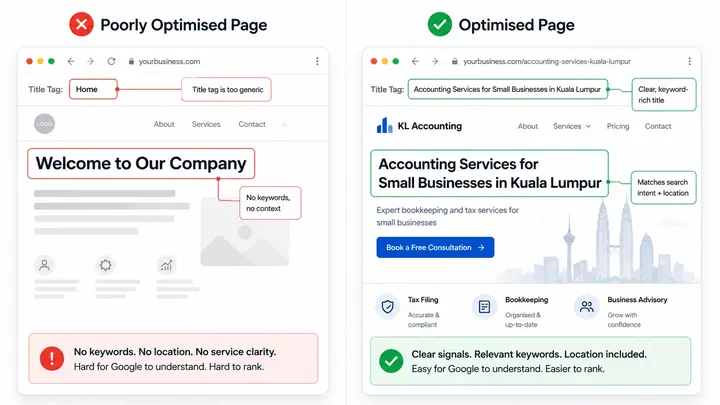
Fix: Every page on your site needs a specific, keyword-informed title, a clear H1, and content that covers the topic properly. A service page for an accounting firm in Kuala Lumpur should say "Accounting Services for Small Businesses in Kuala Lumpur" - not "Our Services."
Reason 2: Your Site Has No Authority
Google doesn't just ask "is this page relevant?" It also asks "should we trust this source?"
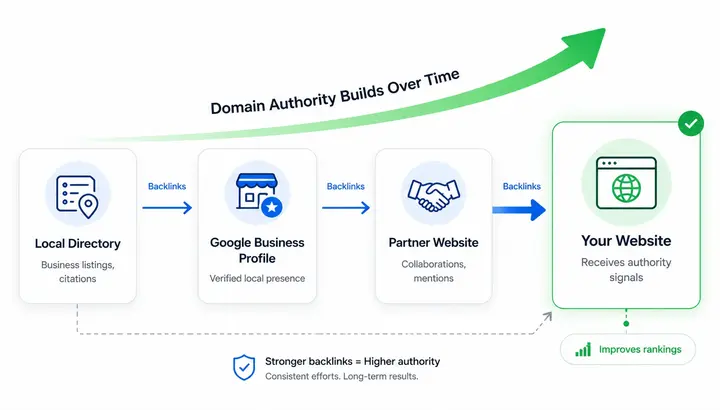
Trust, in Google's model, is largely built through backlinks - other websites linking to yours. A new site with zero backlinks has no authority. It can publish perfectly optimised content and still rank below older, less well-written pages that have accumulated links over years.
The reality that nobody explains when selling you a website: ranking takes time, and that time is largely determined by how much credibility your domain has accumulated.
Fix: Start building links early, even modestly. Get listed in local business directories (Google Business Profile is the most important). Ask partners, suppliers, or associations you belong to for a link. Publish content worth referencing. Authority builds slowly - which is why starting matters more than waiting until the site is "ready."
Reason 3: You're Targeting Keywords You Can't Win Yet
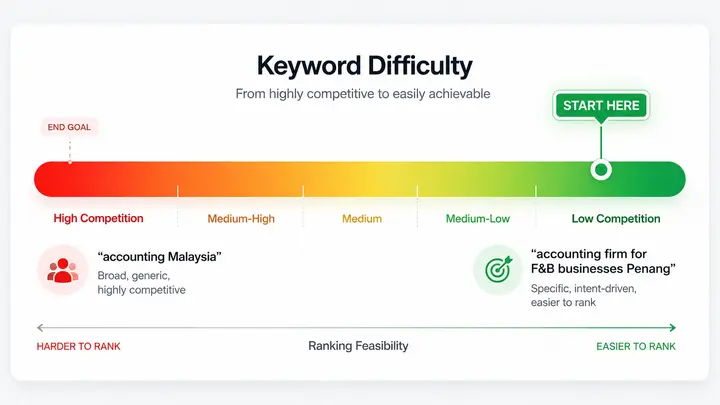
A new accounting firm's website cannot rank for "accounting services Malaysia" in its first year. That keyword is contested by firms with ten years of domain history, thousands of backlinks, and content teams.
Many small business websites target broad, high-competition keywords and wonder why they're not appearing. The answer is that they're competing in the wrong race.
Fix: Target specific, lower-competition keywords first. "Accounting firm for F&B businesses in Penang" is less searched than "accounting Malaysia" - but it's also far less contested, and the people who search it are exactly the clients you want. Rank for the specific terms first, build authority, then move up.
Reason 4: Your Content Is Too Thin to Rank
Google's systems evaluate whether a page genuinely helps the person who searched. A services page with three sentences and a contact form doesn't help anyone. It doesn't answer questions, doesn't explain what the service includes, and gives Google nothing substantial to index.
Thin content - pages under 300 words with no real substance - ranks poorly or not at all for competitive searches.
Fix: A services page should be at least 400-600 words and cover: what the service is, who it's for, what's included, how it works, and what happens next. That's not padding - that's the information a potential client actually needs before they enquire.
Reason 5: Your Site Loads Too Slowly or Breaks on Mobile
Google uses page experience as a ranking factor. A site that loads in eight seconds on mobile, or that has layout elements overlapping on smaller screens, will rank below a comparable site that loads in two seconds and works correctly on all devices.
In Malaysia and India, where mobile is the dominant browsing device and connections vary, speed is not a nice-to-have. It is a ranking signal.
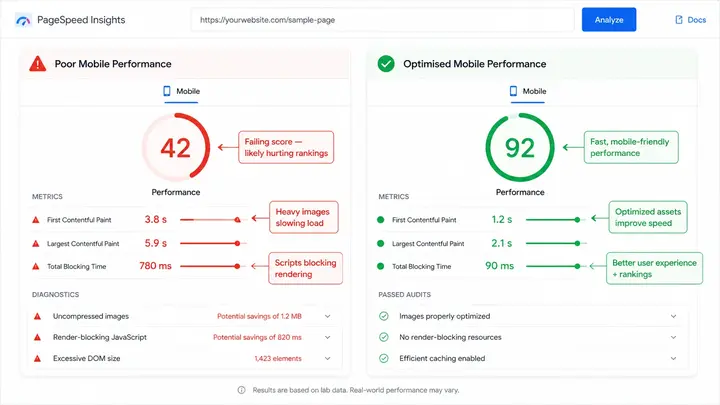
Fix: Test your site on Google PageSpeed Insights (free). If your mobile score is below 50, there are performance problems to fix - most commonly uncompressed images and render-blocking scripts. A developer can address these in a few hours.
Reason 6: Your New Site Simply Needs More Time
Even when everything is done correctly - indexed, optimised, mobile-friendly, with good content - a new domain takes time to earn rankings. For competitive keywords, that's typically three to six months minimum. For very competitive niches, longer.
This is not a flaw in the strategy. It's how search engines work. They weight established, consistent sources over new ones as a spam-prevention mechanism.
Fix: Start the SEO work on day one, not six months after launch. Every month your site is live and properly optimised is a month of authority accumulating. Waiting until you notice you're not ranking means you're already six months behind.