You rank number one on Google for your target keyword. Your analytics show your site is live, and your SEO plugin gives you a green checkmark. Yet, your visitor count is dropping month after month.
You aren't doing anything wrong. The search engine itself has changed.
Google is no longer just a page of ten blue links. Today, when users search for local service providers, pricing guides, or tech recommendations, they are met with a massive, AI-generated summary right at the top of their screen. They get their answer, close the tab, and never click your website link. This shift is why your business needs to expand its toolkit from traditional SEO to a new model: Answer Engine Optimization (AEO).
The Game Has Changed: Why Traditional SEO is No Longer Enough
The old playbooks are failing because search behavior has evolved. In the past, people typed short keyword phrases like "web design agency Mumbai" into Google. They expected a list of sites, clicked three or four options, and made a choice.
Today, they ask full questions like, "Which web design agency in Mumbai specializes in Next.js and fits a budget of under one lakh?" Or, they skip Google entirely and type that prompt directly into ChatGPT, Claude, or Perplexity.
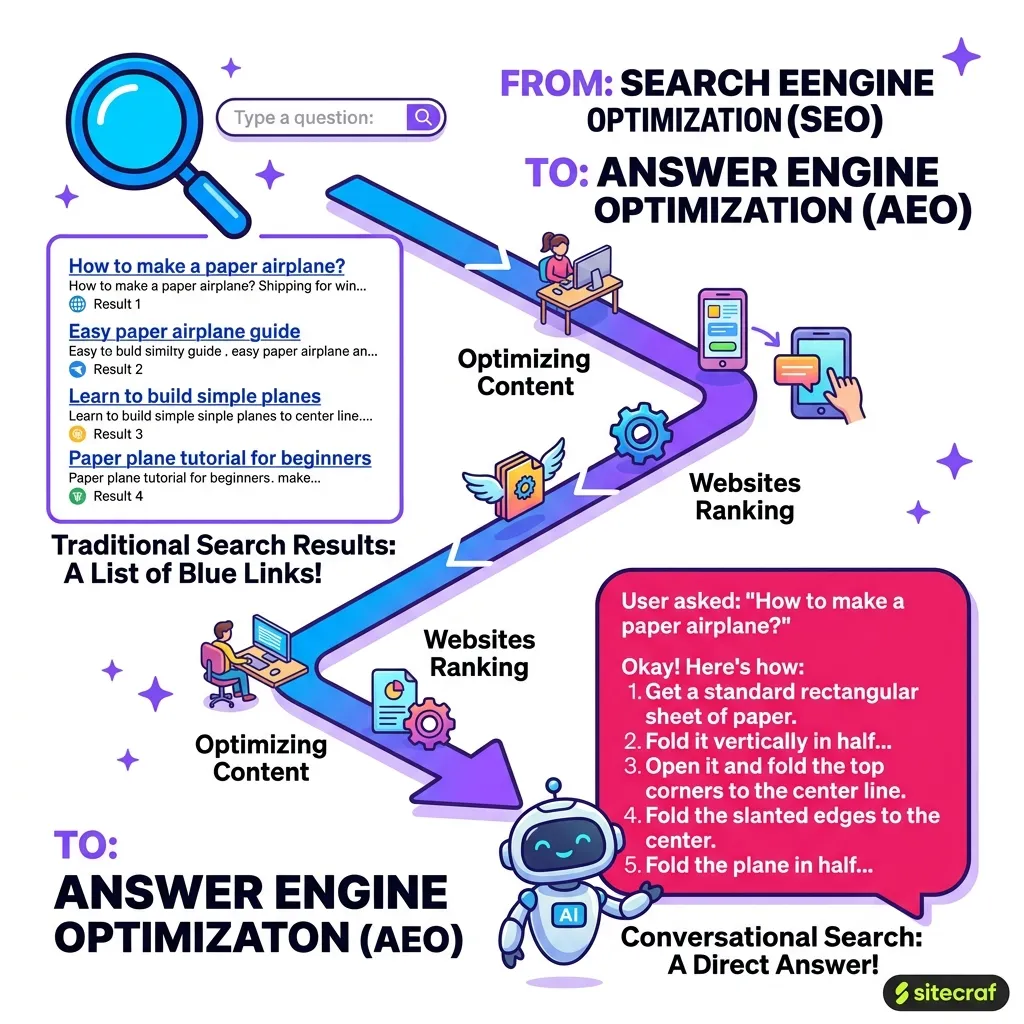
These AI-driven platforms do not show a list of links. Instead, they read hundreds of web pages in seconds, synthesize the information, and present a single, direct answer. If your content is not written and structured in a way these AI engines can parse, your business simply does not exist in their response. You might have the best service in your city, but you remain completely invisible to the user.
What is SEO? (A Quick Refresh for Context)
Search Engine Optimization (SEO) is the practice of optimizing your website to rank higher in search engine results pages. The ultimate goal is to drive organic traffic (visitors) to your website, where they can learn about your services and convert into paying customers.
Traditional SEO relies on three core pillars:
- On-Page SEO: Writing helpful content, using appropriate header tags (H2, H3), and placing keywords naturally in your text.
- Technical SEO: Ensuring your website loads fast on mobile networks, has an XML sitemap, and is secure (HTTPS).
- Off-Page SEO: Building domain authority by getting other reputable websites to link back to yours (backlinks).
For small businesses in India and Malaysia, traditional SEO has been the foundation of digital marketing. It helps you show up when someone searches for "plumber near me" or "accounting software for small business." But as AI tools begin to answer these queries directly, ranking on page one is no longer a guarantee of traffic.
What is AEO? (The Rise of Answer Engines)
Answer Engine Optimization (AEO) is the process of optimizing your digital footprint so that AI engines (like ChatGPT, Claude, Perplexity, and Google AI Overviews) select your business as the correct answer to a user's question.
Instead of trying to get a user to click your link from a list, AEO focuses on getting the AI engine to read your page, extract your business details, and recommend you as a cited source.
AEO is not a replacement for SEO. It is a refinement. While SEO optimizes for algorithms that rank URLs, AEO optimizes for LLMs (Large Language Models) that summarize facts. If a user asks an AI tool, "Who is the most reliable developer for Next.js in Bangalore?", the tool will scan the web for structured facts. AEO ensures your website presents those facts in a format the AI cannot miss.
The Core Differences: SEO vs. AEO
Understanding where these two strategies diverge is key to allocating your marketing budget effectively.
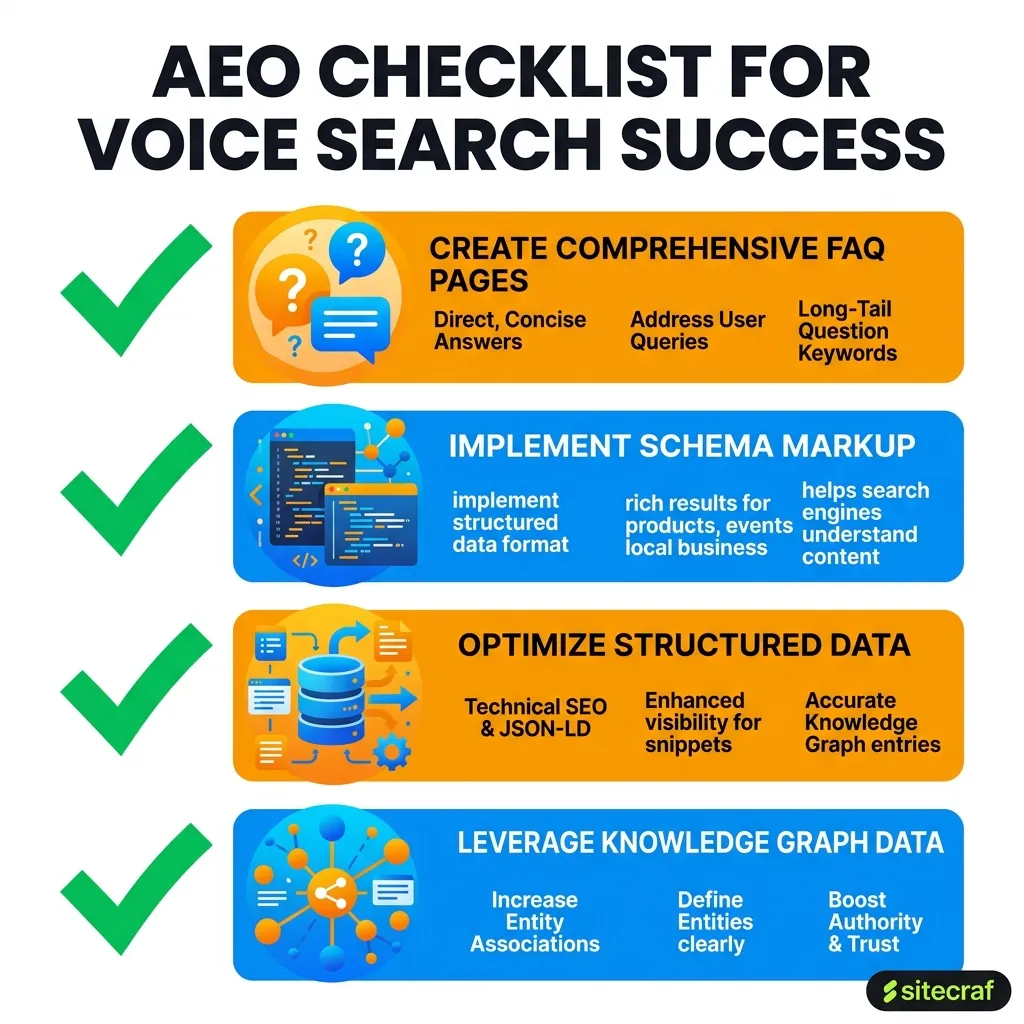
Traditional SEO targets broad keywords and focuses heavily on metadata, site architecture, and building domain authority. Success is measured by keyword positions and monthly organic clicks. The process is slow, often taking six months to a year to show significant traction for a new domain.
AEO, on the other hand, targets question-based, conversational queries. It requires you to write clear, direct, and structured answers (often in Q&A format) that can be easily parsed by AI crawlers. Success is measured by how often your brand is cited or mentioned in AI responses. The impact can be much faster because AI search engines prioritize clear, structured facts over long-term domain age.
Why Small Businesses Need Both to Survive Online
You do not have to choose between SEO and AEO. In fact, choosing one over the other is a recipe for failure. A successful small business website in 2026 uses a hybrid approach.
Traditional SEO is still essential for capturing high-intent searchers who want to browse and compare. If someone wants to read a detailed case study or look at a design portfolio, they will still visit a website. SEO ensures they find you when they want to make that deep dive.
But AEO is what protects you from losing the top of the funnel. When a user wants an instant answer—like "what does a basic website cost in Delhi?"—they will read the AI overview. If your website is the source that Google AI Overviews cites for that cost breakdown, you still win the brand exposure and the high-intent referral click. By combining both, you capture both the quick-answer searchers and the deep-research buyers.
Actionable Checklist: How to Optimize Your Site for AEO Today
Getting started with AEO does not require a massive budget or a team of developers. You can begin optimizing your existing content today by following these three steps:
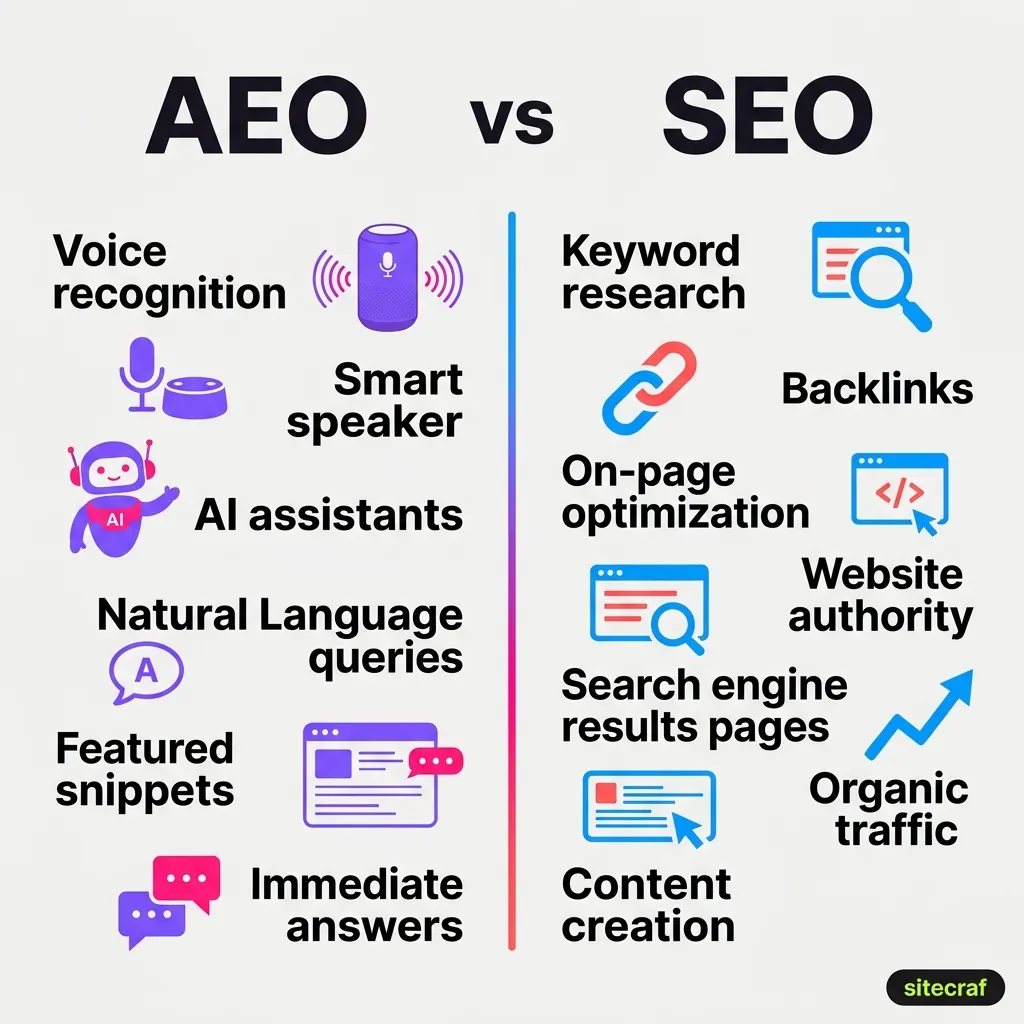
1. Write in a Clear Q&A Format
AI engines look for direct answers to questions. On your key landing pages and blog posts, structure your sections with question headers (H2/H3) and answer them immediately in the first two sentences. Use simple, subject-verb-object sentence structures. Avoid fluff, metaphors, and jargon that might confuse an AI parser.
2. Implement FAQ Schema Markup
FAQ Schema is code you add to your website that explicitly tells search engines: "Here is a common question, and here is our official answer." This makes it incredibly easy for Google's crawlers to index your Q&A sections and display them in both search snippets and AI overviews.
3. Build Citations and Mentions
AI engines rely on consensus. If multiple sites across the web (directories, news portals, blogs, review sites) all state that your business provides web design services in Malaysia, the AI model builds confidence in that fact. Keep your NAP (Name, Address, Phone number) consistent across all digital platforms.
Ready to Get Recommended by AI?
As AI search becomes the norm, the businesses that structure their websites for both human readers and AI crawlers will dominate the search results. If you are still relying entirely on ten-year-old SEO tactics, you are leaving your traffic open to competitors who are optimizing for the future.
At Sitecraf, we build high-performance Next.js websites that are fully optimized for both traditional Google SEO and modern AI-driven AEO. We build the schema, structure the content, and optimize the speed so your business gets recommended first.
Let's discuss how we can get your business cited as the primary authority in your industry.
Get a Free Website AEO Audit on WhatsApp →